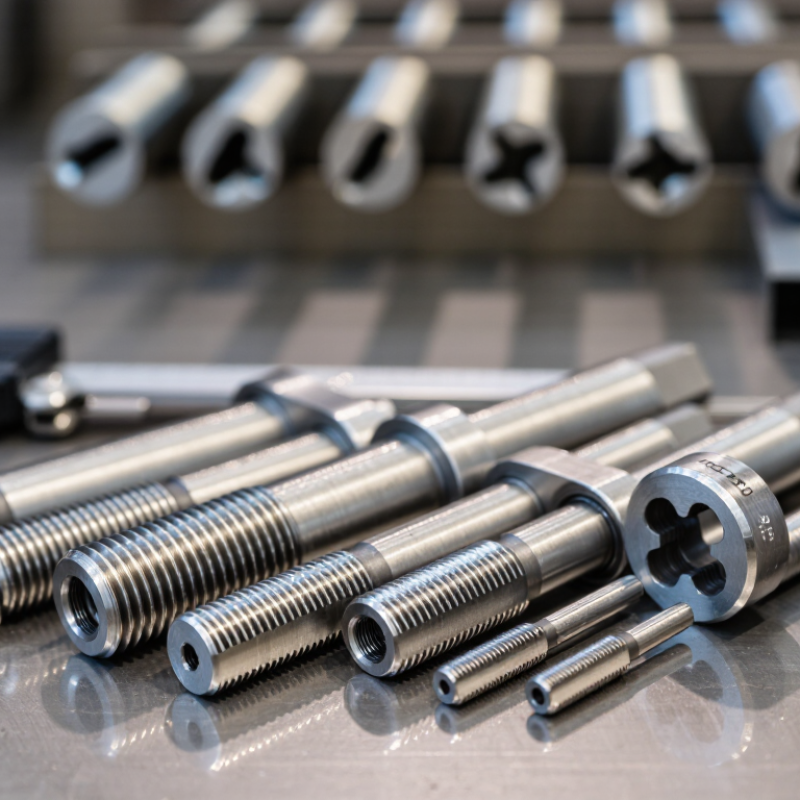
China Best Stainless Threaded Rod Supplier?

Choosing the China Best Stainless Threaded Rod Supplier? The answer depends on more than price, product photos, or a polished website. Buyers need consistent threads, accurate dimensions, reliable material grades, and stable delivery. Stainless Threaded Rod products may look similar on a screen. Their performance can differ greatly on a construction site or inside a production line.

This guide examines how experienced buyers evaluate Chinese manufacturers and exporters. It considers common grades, including 304 and 316 stainless steel, along with metric and imperial thread options. Details matter. A practical inspection should check thread smoothness, rod straightness, surface finish, and actual diameter. Samples can be measured with thread gauges before larger orders are approved. Mill certificates and inspection reports also help confirm material claims. They are useful, not magical.

Supplier experience should be visible in technical communication, production records, packaging methods, and responses to difficult questions. A dependable company can explain tolerances, cutting services, heat treatment, minimum order quantities, and lead times clearly. It should also identify limitations instead of promising everything. No supplier is perfect. Some factories may offer excellent machining but weaker export support. Others may provide fast communication but limited quality documentation.

For corrosion-sensitive applications, buyers should match the stainless grade to the environment, load, and installation conditions. Coastal air, chemical exposure, and trapped moisture can change the decision. This article will compare manufacturing capability, quality control, customization, pricing, and after-sales support. The goal is not to promote the cheapest option. It is to help readers select a reliable China-based partner with evidence, practical judgment, and fewer costly surprises.

China Best Stainless Threaded Rod Supplier?

Stainless Threaded Rod Grades: 304, 316, and 316L with 16–18% Chromium

Choosing the best stainless threaded rod supplier in China starts with grade control, not appearance. Grade 304 commonly contains about 18–20% chromium, while 316 and 316L usually contain 16–18% chromium. These ranges follow chemistry requirements referenced in ASTM F593 and ISO 3506-1. Chromium forms a passive oxide layer, helping rods resist moisture and surface corrosion.

Grade 304 suits indoor frames, machinery, and general construction. Grade 316 adds molybdenum, normally around 2–3%, improving resistance to chlorides and coastal exposure. Grade 316L keeps similar chromium and molybdenum levels, but its carbon limit is lower, typically 0.03% maximum. That detail reduces carbide precipitation after welding. It matters in fabricated assemblies.

Small differences matter.

The International Stainless Steel Forum reported global stainless crude steel production of approximately 58.4 million tonnes in 2023. This figure shows the scale of demand, but it does not guarantee threaded rod quality. In practical purchasing, I check heat numbers, mill certificates, thread gauges, and salt-spray or corrosion-test records. A common mistake is choosing 316 solely because it sounds stronger. It is usually more corrosion-resistant, not automatically stronger. Thread fit, tensile class, surface finish, and traceability still require verification. Some suppliers provide attractive certificates, yet inspection may reveal mixed batches or incomplete chemical data. That is where careful sampling becomes necessary.

Mechanical Standards: ASTM F593, ISO 3506-1, and GB/T 3098.6

China Best Stainless Threaded Rod Supplier?

A reliable stainless threaded rod supplier should work from mechanical standards, not catalog labels. ASTM F593 defines requirements for stainless steel bolts, screws, and similar fasteners, including strength and corrosion-resistant grades. ISO 3506-1 classifies stainless fasteners by steel group, property class, and performance. GB/T 3098.6 provides China’s corresponding mechanical requirements for stainless steel fasteners. These standards overlap in purpose, but their grade markings and test methods are not identical.

Check the mill certificate, heat number, tensile strength, yield strength, and elongation for every production batch. A practical inspection should also verify thread accuracy, surface defects, dimensional tolerance, and passivation records. ISO 3506-1 commonly uses property classes such as 50, 70, and 80, where the number indicates minimum tensile strength in megapascals divided by ten. Small details matter. A bright surface proves little.

Corrosion control deserves more attention. The NACE IMPACT study estimated global corrosion costs at about 2.5 trillion US dollars annually, near 3.4% of global GDP. That figure explains why material selection cannot rely on appearance alone. A supplier should match alloy grade, environment, load, and installation practice. ASTM F593 may fit one project, while ISO 3506-1 or GB/T 3098.6 may govern another. I have seen specifications copied without checking compatibility. That shortcut remains risky. Supplier audits, independent testing, and traceable records create stronger evidence than promises.

China Best Stainless Threaded Rod Supplier? Mechanical Standards Comparison

Minimum tensile strength benchmarks for representative austenitic stainless fastener grades specified by ASTM F593, ISO 3506-1, and GB/T 3098.6.

ASTM F593 data shown: 304 stainless steel, CW1 condition, 85 ksi minimum tensile strength, converted to approximately 586 MPa. ISO 3506-1 and GB/T 3098.6 data shown: A2-70 grade, 700 MPa minimum tensile strength. Grade designations, test methods, dimensional ranges, and acceptance requirements should be checked against the latest edition of each standard.

Thread Specifications: Metric 6g, UNC, UNF, Diameter, and Pitch Accuracy

China Best Stainless Threaded Rod Supplier?

Choosing a stainless threaded rod supplier requires more than checking steel grade or surface appearance. Thread accuracy controls assembly, preload, and long-term service performance. For metric rods, the 6g tolerance class usually describes the external thread. It should match the specified internal thread class without excessive looseness. Small errors matter.

During supplier evaluations, I compare the stated diameter with calibrated micrometer readings. I also verify pitch using thread gauges and optical inspection when tolerances are tight. A rod marked M8 should not rely on nominal labeling alone. Its measured major diameter and pitch must remain consistent along the usable length. UNC and UNF threads need equal attention. UNC uses a coarser pitch, while UNF provides finer engagement. Mixing them can cause partial contact or damaged nuts.

Imperfections appear in real production. I once found acceptable-looking rods with inconsistent thread starts near the chamfer. The problem was easy to miss.

A reliable supplier should provide batch inspection records, gauge results, and clear tolerance data. Check both ends and the middle section, not only one sample.

Stainless steel can resist corrosion, yet poor rolling, burrs, or uneven pitch still reduce installation quality. Ask how diameter, pitch, thread class, and surface finish are controlled during production. Supplier confidence should come from repeatable measurements, not polished photographs.

Corrosion Selection: 316 Stainless Steel with 2–3% Molybdenum for Chlorides

China Best Stainless Threaded Rod Supplier?

For chloride exposure, 316 stainless steel is usually a stronger choice than 304. Its 2–3% molybdenum content improves resistance to pitting and crevice corrosion. This matters near seawater, coastal air, swimming pools, and chemical processing areas. Threaded surfaces deserve extra attention. Their grooves can hold salt, water, and cleaning chemicals.

I have seen 316 rods perform well in outdoor assemblies, but material selection alone cannot prevent every failure. It is not corrosion-proof. Poor drainage, damaged threads, and trapped deposits may still create rust stains. A practical supplier should provide mill test certificates, heat-number traceability, and chemical composition records. Check that molybdenum falls within the specified range. Do not rely only on a polished appearance.

Small details matter.

Ask for dimensional inspection reports, tensile results, and hardness data for each production lot. Thread accuracy affects installation and load distribution. Passivation can improve the surface condition after machining, while clean packaging prevents iron contamination during transport. For severe chloride service, request corrosion testing or independent laboratory verification. Review the design too. Galvanic contact with carbon steel can accelerate corrosion around washers and nuts. A supplier may offer excellent rods, yet the complete connection can still fail if the surrounding metals are poorly matched.

Supplier Verification: ISO 9001, Material Certificates, Testing, and Traceability

China Best Stainless Threaded Rod Supplier?

A reliable supplier must prove more than a competitive quotation. The ISO Survey 2022 recorded over 1.2 million ISO 9001 certificates worldwide. Certification helps, but it does not guarantee every threaded rod meets your specification. Request the current certificate, registration scope, issuing body, and production-site address. Check whether the scope covers fastener manufacturing, not only trading activities.

Material certificates should identify the heat number, grade, chemical composition, mechanical results, and applicable standard. For stainless threaded rods, compare the certificate with an independent laboratory report when the application is critical. Testing may include tensile strength, hardness, dimensional inspection, and corrosion-related checks. The World Stainless Association reported approximately 55.3 million tonnes of stainless crude steel production in 2022, showing the scale and complexity of the supply chain. Large volume does not remove the need for verification.

Traceability should continue from steel mill records to packing labels. Ask for a sample traceability chain. The heat number should match the mill certificate, inspection report, and carton marking. Keep dated photographs of thread gauges, surface condition, and packaging before shipment. Factory audits are useful, though remote audits can miss process weaknesses. I have seen paperwork look complete while labels were unclear. That is a warning. Require corrective-action records and retesting rules before approval. Supplier verification is never perfectly finished.

China Best Stainless Threaded Rod Supplier? - Supplier Verification: ISO 9001, Material Certificates, Testing, and Traceability

Verification Dimension What to Verify Acceptable Evidence Key Data or Acceptance Criteria Recommended Verification Method Risk if Not Verified
Quality Management System Whether the manufacturing site operates a documented quality management system. Current ISO 9001 certificate showing the legal entity, certified site, scope, issue date, expiry date, and certification body. Certificate must be valid, site-specific, and applicable to fastener manufacturing or related metal products. Check the certificate directly with the issuing certification body or its public database; compare the legal entity and site address. Uncontrolled processes, inconsistent inspection records, and limited corrective-action control.
Material Grade The stainless steel grade and product condition used for the threaded rod. Mill test certificate or material certificate linked to the supplied heat or cast number. Common grades include austenitic 304/304L and 316/316L; the specified grade must match the purchase order and applicable standard. Compare chemical composition, mechanical properties, grade designation, heat number, and product size with the order requirements. Incorrect corrosion resistance, reduced strength, or rejection during incoming inspection.
Chemical Composition Whether the alloy chemistry complies with the specified material standard. Heat-analysis results on the material certificate and, when required, independent laboratory or handheld XRF screening. Elements such as chromium, nickel, molybdenum, carbon, manganese, and silicon must fall within the limits of the specified standard. Review the certificate and test a representative sample from the delivered lot; use laboratory testing for dispute resolution. Material mix-ups, premature corrosion, and failure to meet project specifications.
Mechanical Properties Tensile strength, yield or proof load, and elongation of the threaded rod material. Test report from an accredited laboratory or controlled in-house laboratory, linked to the production lot. Requirements depend on the selected fastener standard, diameter, alloy, and property class; do not accept generic values without the governing standard. Verify the test method, specimen details, lot number, results, and acceptance limits against the purchase specification. Thread stripping, premature fracture, or unsafe performance under applied load.
Dimensional Accuracy Diameter, length, thread pitch, straightness, and end condition. Inspection report using calibrated micrometers, calipers, thread gauges, and length gauges. Dimensions and tolerances must conform to the drawing, purchase order, and referenced product standard; thread gauge fit should be recorded. Perform first-piece, in-process, and final-lot inspection on a defined sampling plan. Assembly problems, excessive play, galling, or inability to achieve the required clamping force.
Thread Standard Thread form, pitch, tolerance class, and whether the thread is metric or inch-based. Approved drawing, thread inspection record, and matching GO/NO-GO gauge results. The thread designation, pitch, tolerance, and length must be stated clearly; metric and inch threads must not be mixed. Confirm gauge calibration status and verify samples from each production lot. Nuts may not run freely, or the connection may not achieve proper engagement.
Surface Finish Surface condition, cleanliness, burrs, scratches, discoloration, and passivation requirements. Visual inspection record, agreed surface specification, and passivation or cleaning report when specified. No harmful burrs, cracks, heavy scale, embedded iron, or contamination; finish requirements must be defined before production. Inspect under suitable lighting and use contamination or free-iron testing when the application requires it. Thread damage, installation injury, staining, or localized corrosion.
Corrosion Resistance Suitability of the selected grade and surface treatment for the service environment. Material verification, passivation records, and application-specific corrosion test results when required. 304/304L and 316/316L are not interchangeable in every environment; chloride exposure, temperature, and chemicals must be considered. Review the environment with a qualified engineer; do not use salt-spray hours alone to establish stainless-steel suitability. Pitting, crevice corrosion, tea staining, or premature service failure.
Traceability Ability to trace finished rods back to raw material and production records. Lot number, heat number, production date, machine or line record, inspection report, and packing-list references. Every package should carry a lot identifier that matches the certificate and final inspection documents. Conduct a document-to-label-to-sample reconciliation during pre-shipment inspection. Affected lots cannot be isolated during a complaint, recall, or material investigation.
Testing Equipment Calibration and suitability of measuring and testing equipment. Calibration certificates, equipment register, calibration status labels, and maintenance records. Equipment must be within its calibration interval and suitable for the measurement range and required accuracy. Review records and observe a demonstration using instruments relevant to the order. False acceptance or rejection caused by unreliable measurements.
Sampling and Final Inspection Whether inspection is performed consistently on incoming material, in-process output, and finished goods. Inspection plan, sampling level, nonconformance records, corrective actions, and final inspection report. The plan should define sample quantity, critical dimensions, acceptance limits, and treatment of nonconforming products. Approve the inspection plan before production and perform independent pre-shipment inspection for higher-risk orders. Defects may pass undetected or be hidden by incomplete inspection records.
Packaging and Identification Protection against moisture, contamination, impact, and mixing during storage and transport. Approved packing specification, package labels, quantity records, and photographs before shipment. Labels should state size, grade, quantity, lot or heat number, and destination information where required. Check packaging samples and reconcile package counts with the packing list and inspection report. Mixed sizes or grades, transit damage, corrosion staining, and difficult stock control.
Nonconformance and Corrective Action How the supplier controls defective material and prevents recurrence. Nonconformance reports, root-cause analysis, corrective-action records, and evidence of effectiveness review. Defective or suspect lots must be identified, segregated, dispositioned, and documented before release. Review recent anonymized records and confirm that corrective actions include responsible personnel and completion dates. Repeated defects, unclear liability, and unreliable supplier improvement.
Pre-Shipment Release Whether shipment is released only after contractual and technical requirements are met. Signed final inspection report, approved material certificates, test reports, photographs, and release authorization. Documents must correspond to the actual shipment, lot numbers, quantities, specifications, and agreed acceptance criteria. Use document review plus random physical verification before shipment for critical applications. Non-compliant goods may arrive before problems are identified, increasing replacement cost and schedule impact.

Note: Final acceptance criteria should be based on the purchase order, approved drawing, applicable fastener standard, and service conditions. Supplier claims should be supported by current, lot-specific records rather than general product brochures.