What is a check valve and why is it essential in 2026?
In the evolving landscape of engineering, the check valve remains a pivotal component. In 2026, its importance cannot be overstated. John Smith, a leading expert in fluid mechanics, emphasizes, "Check valves are the unsung heroes of efficient systems." These devices ensure that fluid flow is regulated, preventing backflow and potential system failures.
Innovative industries increasingly rely on check valves. Their role spans various applications, from water treatment to oil and gas. Without them, systems face significant risks, including leaks and inefficiencies. Imagine a factory line halting due to backflow; that is a nightmare scenario.
Yet, as technology advances, the design and functionality of check valves must adapt. There are imperfections in current models. Some may not close effectively under specific pressure conditions. This presents challenges that require ongoing reflection and improvement. Enhancing these valves will be crucial in routing fluid dynamics responsibly.
What is a Check Valve and Its Purpose in Fluid Systems
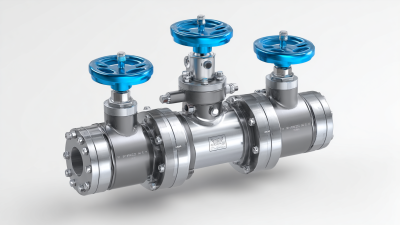
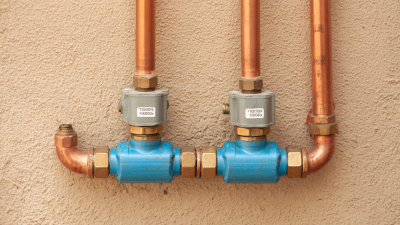
A check valve is a vital component in fluid systems. It allows fluid to flow in one direction only. This feature prevents backflow, which can cause damage. For example, in a water supply system, a check valve stops dirty water from returning to clean sources.
The main purpose of a check valve is to ensure system efficiency. When fluids reverse direction, it can lead to increased pressure. This may cause pipes to burst or leaks to form. A well-placed check valve mitigates these risks, providing reliability in operations.
Tips: Regularly inspect check valves for corrosion. Replace them if they show signs of wear. This can prevent unexpected failures. Keep the surrounding area clear of debris. It’s also wise to review installation angles. A poor alignment can lead to inefficiencies. Correct placement is crucial for optimal performance, yet many overlook this detail. Always question if your check valves meet system demands.
Types of Check Valves and Their Applications in Various Industries
Check valves are crucial components in many industries. They prevent backflow, ensuring fluid flows in one direction. Different types serve various purposes. The most common types are swing, lift, and ball check valves. Each type has unique features that cater to specific applications.
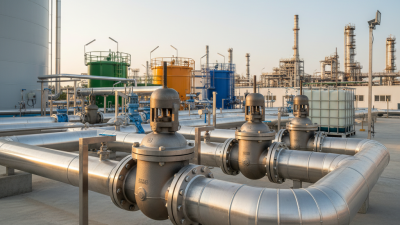
In the water and wastewater sector, swing check valves are popular. They handle large volumes efficiently. In contrast, ball check valves are prevalent in oil and gas. Their compact design suits high-pressure systems well. Lift check valves find common ground in steam applications. They can withstand extreme temperatures.
However, not all systems utilize check valves correctly. Some designs overlook the need for proper sizing. This can lead to inefficiencies and long-term issues. The choices made in valve selection impact overall system performance. Awareness of available types is essential for optimal results.
The Role of Check Valves in Preventing Backflow and System Safety
Check valves play a critical role in fluid systems. They allow flow in one direction while preventing backflow. Backflow can lead to contamination, system failures, and safety hazards. According to a recent report by the Fluid Power Distributors Association, improper backflow can account for up to 30% of system failures in industrial settings. This shows the importance of check valves in maintaining system integrity.
In 2026, the demand for efficient flow control solutions will soar as industries increase automation. Check valves are essential for hydraulic and pneumatic systems, ensuring reliable operation. However, not all check valves are created equal. Poor-quality valves may fail, causing significant downtime. Nearly 15% of maintenance costs arise from component failures. Thus, selecting the right valve is crucial for long-term efficiency.
Furthermore, the evolving regulatory landscape emphasizes system safety. Enhanced standards require better backflow prevention. Companies must adapt to these changes to avoid penalties and ensure compliance. As systems grow more complex, the role of check valves becomes even more vital. The future of fluid systems depends on addressing these challenges effectively.
Importance of Check Valves in Preventing Backflow (2026)
Future Innovations in Check Valve Technology for 2026 and Beyond
Check valves are crucial components in fluid systems, allowing flow in one direction and preventing backflow. As we approach 2026, innovations in check valve technology are on the horizon. These advancements will likely focus on improving efficiency and reliability in various applications, from industrial plants to residential systems.
New materials are being developed to enhance durability and resistance to corrosion. In the past, many valves deteriorated quickly. Future designs might utilize advanced polymers or composites to extend service life. This means less frequent replacements and reduced maintenance costs.
Tips: Regular inspections are vital for check valves, even with new technology. It's also essential to educate those involved in installation and maintenance about new materials. Choosing the right size and type of check valve is critical; improper selection can lead to failure.
Additionally, smart check valves featuring sensors could monitor flow rates in real time. This would provide valuable data for predictive maintenance. However, integrating technology can complicate systems. Therefore, careful planning is necessary. These innovations will reflect a growing trend towards automation and smarter infrastructure.
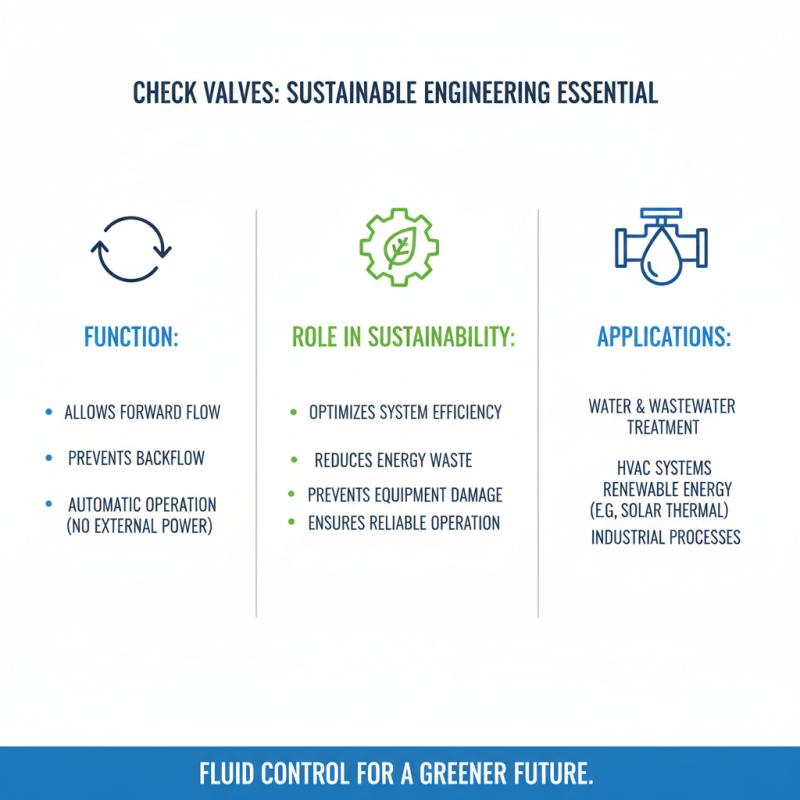
Importance of Check Valves in Sustainable Engineering Practices
Check valves are critical components in many engineering systems. They allow fluid to flow in one direction and prevent backflow. In sustainable engineering, their role becomes even more significant. As we strive for efficiency, these valves help maintain proper fluid dynamics. Without them, systems could fail or become inefficient.
In 2026, the importance of check valves magnifies in various industries. Water management systems, for example, rely on them to prevent contamination. They ensure clean water reaches communities. However, many engineers might not consider maintenance issues. Over time, check valves can wear and compromise functionality. Regular assessments are essential but often overlooked.
Sustainability is about resource management. Using check valves effectively means reducing waste. They save energy by ensuring systems operate correctly. Engineers face challenges, though. They must balance design with practicality. Sometimes, these valves are not the most straightforward to incorporate. Yet, the effort is worthwhile. Proper implementation can lead to substantial long-term benefits.

 More
More