
Choosing the best Carton Printing Machine in 2026 is not simply a matter of comparing top speeds. A machine may look impressive in a showroom, then struggle with short runs, frequent artwork changes, or uneven board feeding. Real production floors are less tidy. That matters.
Industry reports offer useful context. Smithers’ The Future of Global Packaging to 2028 examines continued changes in packaging demand, materials, and production technology. PMMI’s packaging industry research also tracks automation and workforce challenges that affect equipment decisions. These reports do not identify one universally best printer. They do show why buyers should assess print quality, changeover time, operating costs, and compatibility with their existing converting line.
A useful comparison starts with the cartons you actually produce: board grade, print area, colors, daily volume, and required finish. Then examine measurable evidence, such as registration accuracy, waste rates, and output during sustained production—not just a brief demonstration. Ask suppliers for references from plants with similar workloads. Request a sample run on your own board, if possible. Small details count: ink drying, dust near the feeder, and how quickly an operator can clear a misfeed.
No machine wins every job. The right choice depends on your production mix, budget, maintenance capacity, and growth plans. Some buyers may also discover that their current bottleneck is converting, not printing. This guide compares the main machine types and practical selection criteria, while treating supplier claims as claims until production data supports them.
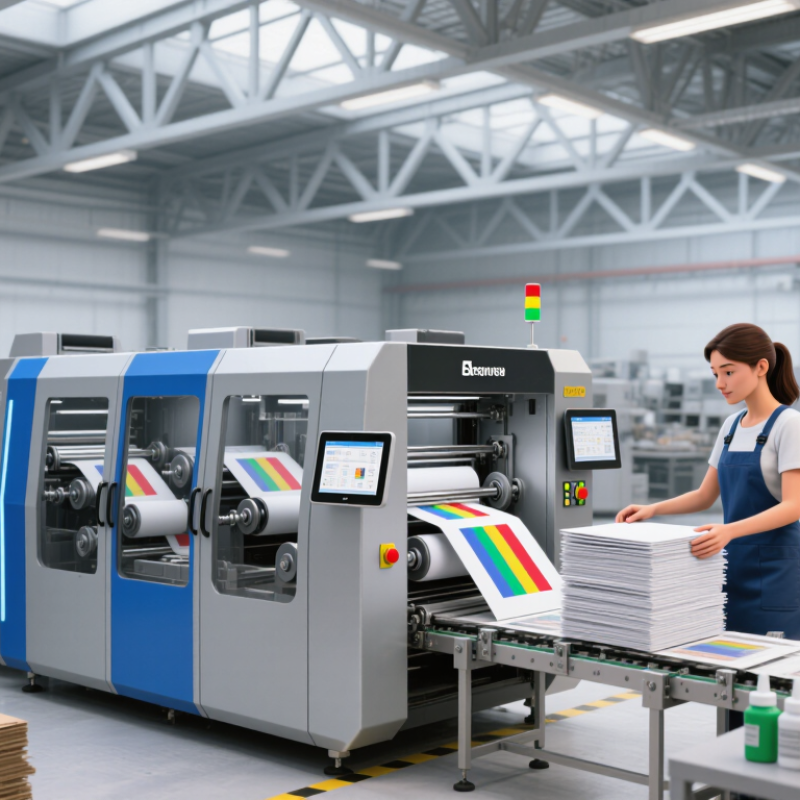
What Is the Best Carton Printing Machine in 2026?
What a Carton Printing Machine Is and What It Does
A carton printing machine transfers text, graphics, barcodes, and color onto paperboard or corrugated sheets. It can process flat blanks, folded cartons, or printed board rolls, depending on its configuration. The machine usually includes a feeding system, printing units, drying equipment, and delivery section. Some production lines also add creasing, die-cutting, folding, and gluing functions.
That sounds simple. It is not.
In daily production, accurate feeding matters as much as print quality. Dust, board moisture, and uneven sheets can cause registration errors or weak ink adhesion. Flexographic systems suit many corrugated cartons, while offset and digital systems support different detail, volume, and customization needs. Operators check color density, barcode readability, print pressure, and drying before releasing a batch. A small adjustment can prevent thousands of imperfect cartons.
The best carton printing machine in 2026 depends on board type, order volume, artwork complexity, and available floor space. A fast machine may waste material if setup changes are slow. A highly automated system may still need skilled inspection. Food and pharmaceutical packaging also require suitable inks, clean operating procedures, and documented compliance checks. These requirements must be verified for the destination market. No machine is perfect. Even reliable equipment needs maintenance, calibration, and occasional correction. A practical choice balances output, print consistency, changeover time, operator training, energy use, and long-term service support.
A carton printing machine converts flat board into accurate, sale-ready packaging. The process begins with a feeder. It separates sheets and guides them toward the printing units. Registration sensors then align each sheet before ink reaches the surface.
Offset machines transfer ink from a plate to a rubber blanket, then onto carton board. Flexographic systems use raised plates and fast-drying ink. Digital machines apply images directly through computer-controlled printheads.
Each method has a different strength. Offset suits detailed graphics and longer runs. Flexography handles continuous production efficiently. Digital printing reduces setup time for shorter batches.
After printing, hot air or infrared systems remove moisture. Coating units may add gloss, protection, or a tactile finish. The board then moves through creasing and die-cutting equipment.
A minor feeding error can damage an entire stack. It happens.
Smithers’ The Future of Folding Cartons to 2028 forecasts steady global market growth of roughly 4% annually. This supports demand for faster setup, lower waste, and better color control. PMMI industry reports also identify automation and connected machinery as major packaging priorities.
In my experience, sensors improve consistency, but they cannot replace skilled operators. Paper humidity, ink viscosity, and board stiffness still change the result. The best machine is therefore not simply the fastest one. It must match the carton design, production volume, substrate, and inspection standards.
Choosing the best carton printing machine in 2026 depends on carton material, order volume, artwork complexity, and delivery speed. The main types are offset, flexographic, digital inkjet, and gravure machines.
Offset printing delivers sharp images, smooth gradients, and accurate color control. It suits folding cartons with medium or large production runs. Flexographic machines print efficiently on corrugated board and often support inline coating and die-cutting. Digital inkjet machines remove plate-making steps, making them practical for short runs, seasonal designs, and variable data. Gravure offers excellent consistency but usually needs expensive cylinders, so it fits very high-volume work. According to Smithers’ The Future of Corrugated Packaging to 2028, global corrugated packaging demand is forecast to grow steadily through 2028, increasing pressure for faster and more flexible production. The report also highlights e-commerce and sustainability as major market influences.
Tips: Test the exact board before purchase. Check ink adhesion, drying time, color stability, waste rate, and operator training needs. Ask for measured samples, not only showroom images. A 2024 PMMI packaging trends report identifies automation, digitalization, and labor efficiency as key investment priorities. However, automation is not always the best answer. A smaller converter may gain more from reliable setup changes than from complex software. That part is easy to underestimate. Review total cost over five years, including plates, inks, maintenance, energy, and rejected cartons. Always verify supplier claims with production trials.
What Is the Best Carton Printing Machine in 2026?
Comparing carton printing machines starts with the work you actually run, not the fastest speed on a specification sheet. Ask suppliers to print your carton board, using the artwork, colors, and finish you need. Inspect small text, solid color areas, and fine lines under normal production lighting. The sample should look right beyond the showroom.
Check achievable speed during a sustained run. A machine may print quickly but lose time during setup, plate changes, cleaning, or registration adjustments. Track usable cartons per hour, not just sheets entering the press. Ask how much board is typically wasted before color and alignment stabilize. That number affects both cost and scheduling. Ask for a live demonstration.
Compare feeding and delivery systems against your board’s thickness and shape. Watch for scuffed surfaces, curled blanks, and uneven stacking. If cartons vary in size, find out how long changeovers take and whether one operator can manage them reliably. Review maintenance access, spare-part availability, and technician response times in your region. These details are easy to overlook.
A practical comparison should include your operators. Can they adjust ink, inspect registration, and clear routine jams without lengthy training? I would also test a normal job, not only a perfect sample; real production is less tidy. No single specification decides the best fit. Weigh print consistency, changeover time, waste, and support against your order mix and available floor space.
| Comparison factor | Flexographic press | Sheetfed offset press | Digital inkjet press | Hybrid press |
|---|---|---|---|---|
| Best suited to | Corrugated packaging and repeat production runs; also used for some folding-carton applications. | High-quality folding cartons and litho-laminated corrugated packaging. | Short runs, frequent artwork changes, prototypes, and personalized packaging. | Jobs that benefit from combining conventional printing with digital content or variable data. |
| Printing process | Flexible relief plates transfer ink to the board or to an intermediate surface. | Plate-based offset printing transfers ink through a blanket onto sheets. | Ink is deposited directly from digitally controlled printheads, without a printing plate for each design. | Combines digital printing with one or more conventional processes; the exact configuration varies. |
| Common board applications | Well established for corrugated board, including direct printing and post-print applications. | Common for folding-carton paperboard; corrugated work is often printed on a separate liner and laminated. | Available for selected folding-carton and corrugated workflows; confirm supported board, coating, and thickness. | Depends on the installed modules and the substrate path; verify compatibility with the intended carton stock. |
| Setup and changeovers | Requires plates, mounting, and make-ready; changeovers can be efficient when jobs and tooling are standardized. | Requires plates and press make-ready; registration and color setup take time when jobs change. | Artwork changes generally do not require new printing plates, which can simplify short-run changeovers. | Can reduce some changeover steps, but conventional sections still require their own plates and setup. |
| Run-length economics | Often attractive for recurring medium-to-long runs; plate and setup costs matter on short jobs. | Often economical for larger, repeatable runs where setup costs are spread across many sheets. | Often useful for short runs and many versions; cost per unit should be checked at the planned volume. | Can suit mixed run lengths, but economics depend on which process performs each part of the job. |
| Color and image quality | Can deliver consistent production color; results depend on plate, ink, anilox, substrate, and press control. | Well suited to fine detail, smooth tones, and high-quality graphics on suitable paperboard. | Quality varies by printhead, ink system, resolution, substrate, and any required coating or pretreatment. | Can combine conventional color capability with digital flexibility; matching color across processes requires control. |
| Variable data and personalization | Usually requires a separate digital or coding solution for unique data on each carton. | Usually prints fixed artwork; unique information commonly needs an additional coding or digital process. | Can support changing graphics or data, subject to the press software and production workflow. | May support variable content through its digital section while using conventional units for fixed graphics. |
| Finishing and converting | Can be configured inline with certain converting steps; available operations depend on press design. | Often paired with downstream coating, die-cutting, and folding-gluing equipment. | May require compatible drying, coating, curing, or downstream finishing equipment. | Inline finishing options vary by configuration; check whether the full process fits the required workflow. |
| Key limitations to check | Plate costs, setup waste, board surface, print direction, and achievable detail on the intended corrugated grade. | Plate and make-ready costs, sheet size, board handling, and whether corrugated work needs lamination. | Ink adhesion, drying or curing, food-packaging requirements, board thickness, and cost at target volume. | Higher system complexity, workflow integration, maintenance needs, and balancing capacity across print sections. |
| Best choice when… | Your main workload is repeat packaging production, especially corrugated jobs, and plate-based economics suit the run size. | You need high-quality folding-carton graphics and have enough volume to justify plate-based setup. | Your workload includes many short runs, frequent design changes, or variable-content requirements. | You have a mixed workload and a clear plan for which jobs will use digital, conventional, or both processes. |
| What to compare before purchase | Board range, print quality on actual samples, plate costs, changeover time, waste, and converting compatibility. | Maximum sheet size, supported board, color consistency, make-ready, coating options, and downstream fit. | Supported substrates, usable print area, ink and consumable costs, drying or curing, data workflow, and service support. | Module configuration, workflow integration, color matching, total operating cost, service requirements, and upgrade options. |
Comparison note: There is no single best carton printing machine for every producer. Actual performance and cost depend on the press configuration, substrate, job specifications, run length, operator workflow, and local operating conditions. Request production trials using your own board and artwork before making a purchase decision.
The best carton printing machine depends on the production brief, not the showroom specification. For short runs, a digital press can reduce plate preparation and support frequent artwork changes. This suits seasonal packaging, samples, and personalized cartons. Smithers reported that global packaging print was worth about $491.8 billion in 2023. It also forecasts continued growth through 2028, driven partly by shorter runs and versioned packaging.
For high-volume corrugated cartons, a flexographic printer remains practical. It offers fast output, stable color, and efficient inline converting. Choose it when one design runs for many hours. FEFCO reported European corrugated production at approximately 48.5 billion square meters in 2023. That scale explains why productivity and waste control matter more than impressive resolution alone.
Consider a post-print digital or high-definition flexographic system. Folding-carton producers may prefer offset or hybrid equipment when fine images and coated board are essential. A 2024 industry study from Smithers identified automation, digital workflows, and sustainability as major packaging-printing development areas. In practice, drying time, operator skill, board moisture, and maintenance can change the result. I have seen a fast machine lose value when setup waste quietly consumes each shift. The “best” choice is often less glamorous: match ink, board, run length, changeover frequency, and inspection needs before comparing speed.