7 Ball Check Valve Buying Tips for Global Buyers?

Global buyers often treat a ball check valve as a simple, interchangeable component. That assumption can become expensive. A valve installed in a wastewater line faces different demands from one used in chemical dosing, compressed air, or food processing. Media viscosity, pressure changes, temperature, installation angle, and solids content all affect performance. Small details matter. A heavy ball may reduce reverse flow, yet it can increase cracking pressure. A soft seat may seal well, but it may wear quickly in abrasive service.

Valve author John V. Ballun offers a useful reminder: “A valve must match the process, not merely the pipe.” This principle guides the seven buying tips in this article. The discussion covers material compatibility, pressure ratings, connection standards, flow direction, maintenance access, certification records, and total ownership cost. It also considers supplier communication, because a technically suitable valve can still fail when specifications are incomplete.

Real purchasing decisions are rarely perfect. Product catalogs may omit testing details. Global terminology can create confusion. “Stainless steel” does not always identify the exact grade. “High pressure” means little without temperature and operating data. Buyers should question unclear claims and request drawings, test reports, dimensional details, and installation instructions. That extra step often prevents costly returns.

Look beyond the lowest quotation. Examine the seat, ball, body, spring, and sealing method. Check whether spare parts are available near the operating market. A reliable ball check valve should support safe, stable operation over time—not simply pass an initial inspection.
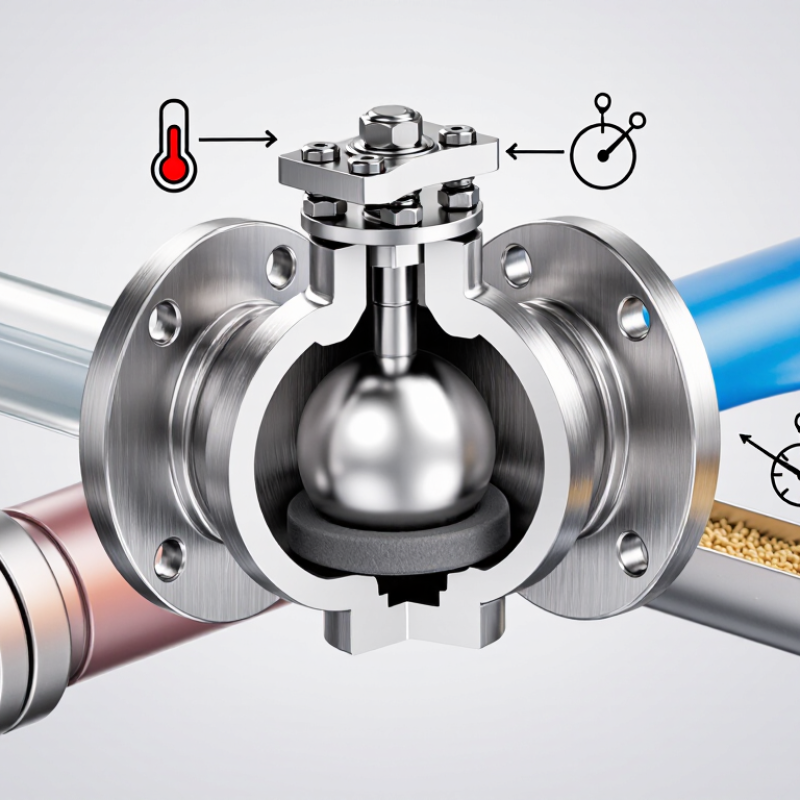
7 Ball Check Valve Buying Tips for Global Buyers?

Understanding Ball Check Valve Design, Types, and Operating Principles

A ball check valve uses a floating or guided ball to control one-way flow. When upstream pressure rises, the ball lifts from its seat. Reverse pressure pushes it back, closing the passage. This simple movement prevents backflow without external power. In field inspections, clear flow direction markings reduce installation errors. Small details matter.

Design selection starts with the ball and seat arrangement. Floating-ball models suit many clean-fluid systems and offer a compact structure. Guided-ball designs improve stability under stronger flow conditions. Metal seats tolerate higher temperatures and abrasive service, while resilient seats often provide tighter sealing. However, softer materials can wear faster when particles pass through the valve.

Buyers should compare pressure rating, temperature range, port size, connection type, and maintenance access. Check the valve’s cracking pressure, because excessive resistance can reduce pump performance. Review material compatibility with the actual fluid, not a general fluid category. A stainless body may resist corrosion, yet the seat or seal may not. Ask for test records, dimensional drawings, and applicable quality documentation. Noise and water hammer also deserve attention in fast-closing systems. No valve is perfect. Some catalog data appears precise but leaves installation conditions unclear. A practical trial under expected flow can reveal problems before full deployment.
7 Ball Check Valve Buying Tips for Global Buyers

Understanding ball check valve design, types, and operating principles helps buyers match the valve with the required pressure class, fluid, temperature, installation position, and maintenance conditions.

Chart explanation: The chart shows common EN nominal pressure classes used in industrial piping systems. PN values indicate the nominal pressure rating in bar under reference conditions; the actual allowable pressure must be confirmed against the valve material, temperature, connection standard, sealing material, and manufacturer datasheet.

Buying checklist: Verify the valve size and connection standard, select a suitable body and ball material, confirm pressure and temperature ratings, check fluid compatibility, consider vertical or horizontal installation requirements, review pressure-loss performance, and request inspection or test documentation for international shipments.

Matching Valve Materials and Specifications to the Application

7 Ball Check Valve Buying Tips for Global Buyers

Matching materials and specifications to the application prevents premature leakage, corrosion, and costly downtime. Start with the fluid. Water, seawater, acids, slurry, and hydrocarbons require different wetted materials. The 2024 UN World Water Development Report estimates that agriculture represents about 70% of global freshwater withdrawals. Irrigation systems therefore need corrosion resistance, low maintenance, and reliable backflow control. Stainless steel may suit clean water, but it is not automatically suitable for every chemical.

Check seven details before requesting a quotation: body material, ball material, seat compound, pressure class, temperature range, connection standard, and testing documents. Stainless steel balls resist many fluids, while coated or polymer balls can reduce weight and seating impact. Seat selection matters under heat. PTFE performs well in many chemical services, but elastomers may seal better in lower-temperature systems. Confirm pressure and temperature together, not separately. A valve rated for high pressure may lose its rating at elevated temperature.

I once treated stainless steel as a universal answer. That was wrong. Chloride exposure can still cause pitting, especially near coastal installations. ISO 5208 provides leakage-testing procedures, while ASME B16.34 helps define pressure-temperature requirements for industrial valves. Ask for material certificates, dimensional drawings, and test results under EN 10204 practices where documentation is required. Verify whether the connection follows an applicable ISO, ASME, or regional standard. Small dimensional differences can stop installation completely. Check the flow direction, minimum velocity, and cleaning method too. A cheaper valve is not cheaper when the ball sticks after three months.

7 Ball Check Valve Buying Tips for Global Buyers? - Matching Valve Materials and Specifications to the Application

No. Buying Tip Application Data to Confirm Typical Material or Specification Match Why It Matters Buyer Verification Checklist
1 Define the fluid and contamination level Liquid, gas, slurry, potable water, hydrocarbons, chemicals, or steam; include pH, chloride content, viscosity, solids concentration, and cleanliness requirements. Carbon steel such as ASTM A216 WCB for compatible non-corrosive services; 316/316L stainless steel such as ASTM A351 CF8M for many mildly corrosive services; lined or alloy construction for more aggressive media. Material compatibility affects corrosion rate, leakage risk, service life, and the possibility of product contamination. Request a chemical-compatibility review, body and ball material certificates, seat and seal material details, and any required sanitary or clean-service documentation.
2 Size the valve using flow conditions, not pipe size alone Nominal pipe size, flow rate, density, viscosity, upstream pressure, downstream pressure, and allowable pressure drop. Select the nominal size and bore arrangement from the manufacturer’s flow data. Compare the valve’s pressure-loss coefficient or equivalent flow data with the system requirement. An oversized valve may have unstable operation or poor low-flow response, while an undersized valve can cause excessive pressure drop and noise. Obtain flow curves, pressure-drop data, minimum and maximum flow limits, and confirmation that the selected size is suitable for the actual operating range.
3 Match pressure and temperature ratings to the complete duty cycle Normal, minimum, maximum, and upset pressure; operating and design temperature; pressure surges; thermal cycling; vacuum exposure if applicable. Use a pressure-temperature rating based on the body material and applicable standard, such as ASME B16.34 or the relevant project specification. PTFE seats generally require lower temperature limits than metal seats; verify the supplier’s published limits. The lowest-rated component—body, seat, seal, connection, or bolting—can limit the safe operating envelope. Check the pressure class or PN rating, temperature derating chart, seat operating range, hydrostatic test pressure, and suitability for pressure pulsation or water hammer.
4 Select corrosion-resistant materials for the actual environment Internal fluid chemistry, external atmosphere, seawater exposure, chloride level, sour-gas content, erosion potential, and required design life. 316L stainless steel may suit many general corrosive services; duplex stainless steel such as UNS S32205 can provide higher resistance in selected chloride environments; sour service may require compliance with NACE MR0175/ISO 15156. Chloride stress-corrosion cracking, pitting, crevice corrosion, and sulfide stress cracking can occur if material selection is based only on nominal fluid type. Confirm material grade, heat treatment, hardness limits, corrosion allowance, sour-service compliance, and traceable material test reports where required.
5 Check installation orientation and reverse-flow behavior Horizontal or vertical pipeline, upward or downward flow, available straight-run length, maintenance access, and expected reverse-flow frequency. Use a ball check valve only within the manufacturer’s permitted orientation. Confirm whether the design is free-floating or guided and whether a spring-assisted version is needed. Incorrect orientation or insufficient closing force can cause delayed shutoff, chatter, water hammer, accelerated seat wear, or reverse leakage. Request an installation drawing, flow-direction marking, minimum backpressure requirement, allowable orientation, and guidance for pump-discharge or vertical-line service.
6 Match end connections and dimensions to local standards Flanged, threaded, socket-weld, or butt-weld ends; nominal diameter; face-to-face length; flange standard; pressure class; gasket and bolt requirements. Common references include ASME B16.5 for many flanges up to NPS 24, ASME B16.10 for face-to-face dimensions, ASME B16.34 for valve design requirements, and EN 1092-1 for specified European flange systems. A dimensional or drilling mismatch can prevent installation, create alignment stress, or compromise gasket sealing. Confirm the exact standard edition, flange facing, bolt-hole pattern, face-to-face dimension, wall thickness, tolerances, and required inspection documents.
7 Specify testing, certification, and documentation before purchase Required leakage class, inspection level, traceability, pressure test standard, fire-safe or emissions requirements, export documentation, and local regulatory rules. For pipeline applications, API 6D may be specified where applicable; API 598 is commonly used for valve inspection and testing; ISO 5208 provides industrial valve pressure-testing classifications. Apply only the standards required by the project. Clear acceptance criteria reduce disputes and help verify pressure boundary integrity, seat tightness, material identity, and production consistency. List required hydrostatic and seat tests, test medium, allowable leakage, calibration records, material certificates, dimensional reports, coating records, certificates of conformity, and spare-part information.

Note: Final material grades, pressure-temperature limits, seat selection, and applicable standards must be confirmed against the project fluid data, governing regulations, and the valve manufacturer’s certified documentation.

Evaluating Pressure Ratings, Flow Performance, and Leak Prevention

7 Ball Check Valve Buying Tips for Global Buyers

Evaluate pressure ratings against the actual operating pressure, temperature, and fluid, not the catalog maximum. Tip one: leave a sensible safety margin. A higher rating is not automatically safer. Tip two: compare pressure drop at the expected flow rate. Ask for flow coefficient data, test conditions, and the valve’s full-open behavior. Tip three: confirm the ball and body materials suit water, oil, chemicals, or abrasive media. Material compatibility directly affects service life. Small details matter.

Tip four: check the seat design and shutoff performance. A resilient seat may seal well at low pressure, while a metal seat can tolerate harsher temperatures. Tip five: verify installation direction and mounting position. Some valves need stable flow to prevent ball chatter, noise, and premature wear. Tip six: request documented leak testing, including the test medium, pressure, duration, and acceptance level. Do not rely on “zero leakage” without test details. Check the seat.

Tip seven: review traceability, dimensional drawings, certificates, and replacement-part availability before purchasing. Global projects can suffer when a small gasket delays commissioning. In field evaluations, inconsistent flow often comes from piping turbulence rather than valve failure. I have found this easy to overlook. Allow straight pipe where possible, protect the valve from debris, and inspect the sealing area after installation. A practical inspection plan should include pressure checks, visible leakage, unusual vibration, and repeated backflow. Performance can change over time.

Checking Global Standards, Certifications, and Supplier Quality

Buying a ball check valve for global service requires more than comparing price and pressure ratings. Start by matching the valve design with the media, temperature, pressure, and installation direction. Confirm the required standard, such as API 6D, ASME B16.34, ISO 5208, or EN 12266. The correct choice depends on the project and destination market. Never assume one standard covers every application.

Ask for pressure-test records, material certificates, and a dimensional drawing before approval. EN 10204 3.1 certificates can support traceability for pressure-retaining parts. Check whether the supplier can provide heat numbers, casting records, and inspection dates. Verify certificates with the issuing laboratory when possible. Paperwork is useful, but paperwork alone is not proof. A polished certificate may still hide weak testing controls.

Review the supplier’s quality system and production history. Look for documented welding, machining, cleaning, coating, and final inspection procedures. Request evidence of calibrated test equipment and batch-level traceability. Independent inspection can be valuable for large orders or critical pipelines. Also confirm applicable requirements, including PED, local pressure-equipment rules, or other regional approvals. A sample valve may perform well, yet mass production can vary. That risk deserves attention. Discuss spare parts, warranty terms, nonconformance handling, and response times in writing. A reliable supplier answers technical questions clearly, admits limitations, and supports corrective action when something goes wrong.

Comparing Total Costs, Delivery Terms, and After-Sales Support

7 Ball Check Valve Buying Tips for Global Buyers

A low quotation rarely equals a low landed cost.

Calculate the valve price, inspection, packing, inland transport, ocean freight, insurance, duties, and bank charges. Add the cost of delayed production. UNCTAD’s Review of Maritime Transport 2024 states that over 80% of global trade volume moves by sea. Therefore, a small freight change can affect the final purchase price significantly. Compare suppliers using the same quantity, pressure rating, body material, and testing requirements.

Delivery terms need careful reading.

Incoterms 2020 defines responsibilities for transport, insurance, customs, and risk transfer, but it does not set product quality. Under FOB, the buyer usually controls the main freight. Under DDP, the seller handles more logistics, yet local tax treatment must be verified. The World Bank’s 2023 Logistics Performance Index examines customs, infrastructure, tracking, and timeliness. Ask for a realistic lead time, not an optimistic one. Request shipment milestones, export documents, and contingency plans.

After-sales support should be measurable.

Confirm warranty length, response time, spare-seat availability, and technical documentation. Ask whether pressure-test records follow ISO 5208 or another specified standard. Check material certificates and serial-number traceability. A practical file should include drawings, packing photos, and installation guidance.

A spreadsheet can still mislead. I would also price one replacement valve and one emergency shipment before approving the order. Cheap support often becomes expensive downtime.